2026-08-28 ·
Choosing the Right French Drain Layout for San Bernardino Sloped Properties
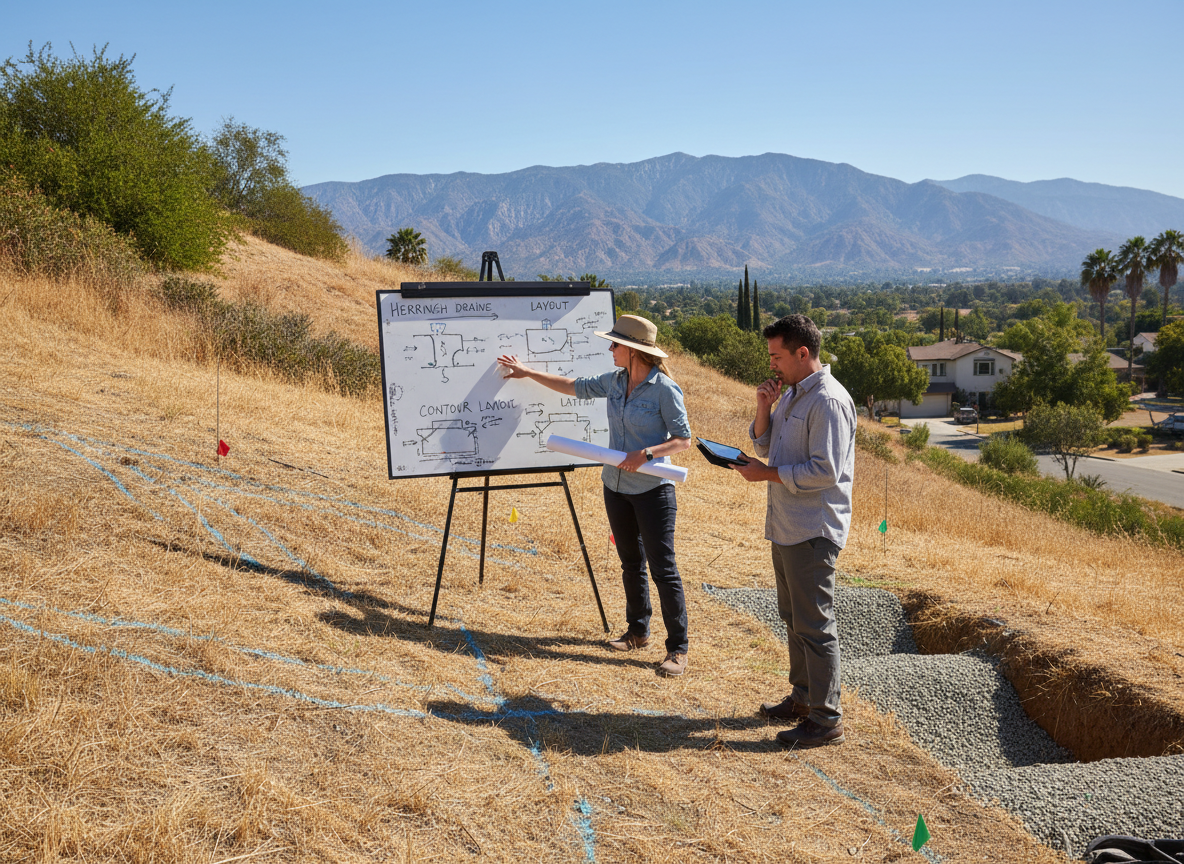
The right layout for most San Bernardino sloped properties is an interceptor French drain installed across the direction of runoff, paired with a solid drainage pipe that carries collected water to a safe downhill outlet. The trench should generally maintain at least a 1% fall, equal to about 1/8 inch per foot, without creating low spots where sediment and water collect. A drain placed straight downhill may move water quickly, but it often fails to intercept broad subsurface flow and can encourage erosion at the outlet. Before choosing a route, identify where water enters the slope, whether it travels on the surface or through the soil, and where it can leave the property without affecting a foundation, neighboring parcel or unstable bank.
Read the Slope Before Drawing the Trench
A useful layout starts with the actual water path rather than the property-line geometry. In foothill areas such as Arrowhead, Verdemont and neighborhoods approaching California State University San Bernardino, elevation changes can direct runoff toward the uphill side of a house, retaining wall or lower patio. Established properties in Downtown San Bernardino, Del Rosa and Muscoy may also have altered grades, additions, mature landscaping or old hardscape that redirects water differently from the original lot plan.
Walk the property during rain when it is safe, then look again after the storm. Mark wet bands, sediment trails, eroded mulch, wall seepage and soil that stays soft longer than surrounding ground. These observations help distinguish a broad hillside seep from a concentrated roof or pavement discharge. If the source is uncertain, a drainage system inspection can establish elevations and locate restrictions before excavation begins. The drain should intercept the wet zone uphill of the area being protected, not merely collect water after it reaches the foundation.
Choose a Layout That Matches the Water Source
San Bernardino slopes usually call for 1 of 3 practical arrangements. Each layout solves a different movement pattern, and combining them is often more effective than forcing every source into a single perforated trench.
- Contour interceptor: Run the perforated section roughly across the slope, with enough continuous fall to drain. This is appropriate where seepage forms a wide wet band above a house, wall or yard.
- Angled interceptor: Use a diagonal route when a level contour would not provide adequate fall. The angle preserves interception while guiding water toward the selected outlet.
- Branch layout: Use short uphill branches feeding a main collector where water emerges from several defined pockets. Keep junctions accessible because turns and fittings are common sediment-catching points.
Roof downspouts and catch basins should generally enter a solid drainage pipe, not discharge into the perforated French drain section. Concentrated surface water can overwhelm the gravel trench and deposit debris. Properties with runoff coming from roofs or paved areas may need catch basin installation as part of the overall layout.
Size the Trench, Pipe and Outlet as One System
A common residential starting point is a 4-inch perforated pipe in a gravel-filled trench, but pipe diameter alone does not determine capacity. Trench depth, aggregate void space, filter fabric, slope length and the amount of water entering the system all affect performance. The perforated pipe should sit on a stable gravel bed with a consistent fall; dips caused by loose backfill can hold sediment and eventually restrict flow.
Use washed drain rock rather than fine material that compacts around the pipe. A suitable geotextile separates the rock from surrounding soil while still allowing water to enter. This matters where a property contains clay-bearing or heavily compacted layers, conditions that should be confirmed at the trench rather than assumed across all of San Bernardino County. The article on French drains for clay soil conditions around San Bernardino explains why slower infiltration changes trench design.
At the lower end, transition to solid drainage pipe before crossing areas where discharged water could saturate soil. Protect any daylight outlet against erosion and keep it visible for inspection.
Account for Heat, Dry Soil and Short Rain Events
San Bernardino’s hot desert climate and very hot summers can make a slope appear problem-free for long periods. Dry surface soil may become hard or cracked, while runoff during a rain event follows compacted paths, landscape borders and pavement edges instead of soaking in evenly. That contrast is why a layout based only on summer observations can miss the active drainage route.
Sun exposure also matters during installation. Filter fabric left uncovered can deteriorate, and open trenches can dry, crumble or collect windblown debris before gravel placement. Complete trench sections methodically rather than opening the entire route and leaving it exposed. Around Highland, Colton and Redlands, changes in elevation and development pattern mean adjacent lots can shed water in very different ways even during the same storm.
French drains are intended for subsurface water, not as a substitute for grading. Swales, downspout extensions and surface inlets may still be needed. For foundation-specific planning, review ways to protect San Bernardino foundations from rainwater runoff before finalizing the trench route.
Check Access, Maintenance and Discharge Before Digging
A good layout must remain serviceable after landscaping is restored. Include accessible cleanouts at the upstream end, major direction changes and long runs where practical. Avoid unnecessary elbows, and do not bury the outlet behind dense planting. Future maintenance is much easier when the route, fittings and discharge point are photographed and measured before backfilling.
Before scheduling French drain installation, confirm these items:
- Utility locations have been marked before excavation.
- The perforated section intercepts the wet area rather than running below it.
- The drainage pipe maintains continuous fall with no reverse grades.
- The outlet will not undermine a slope, retaining wall or walkway.
- Discharge will not be directed onto neighboring property or an unapproved public area.
- Cleanouts and the outlet will remain reachable after planting or hardscape work.
San Bernardino Drainage is based in San Bernardino and serves communities including Arrowhead, Highland, Del Rosa, Muscoy and Verdemont. Business hours are Monday–Friday, 8am–6pm, and Saturday, 9am–2pm. A layout built around measured elevations and a verified outlet is far more dependable than choosing a trench path solely because it is shortest.