2026-08-28 ·
What Affects French Drain Costs for San Bernardino Homes
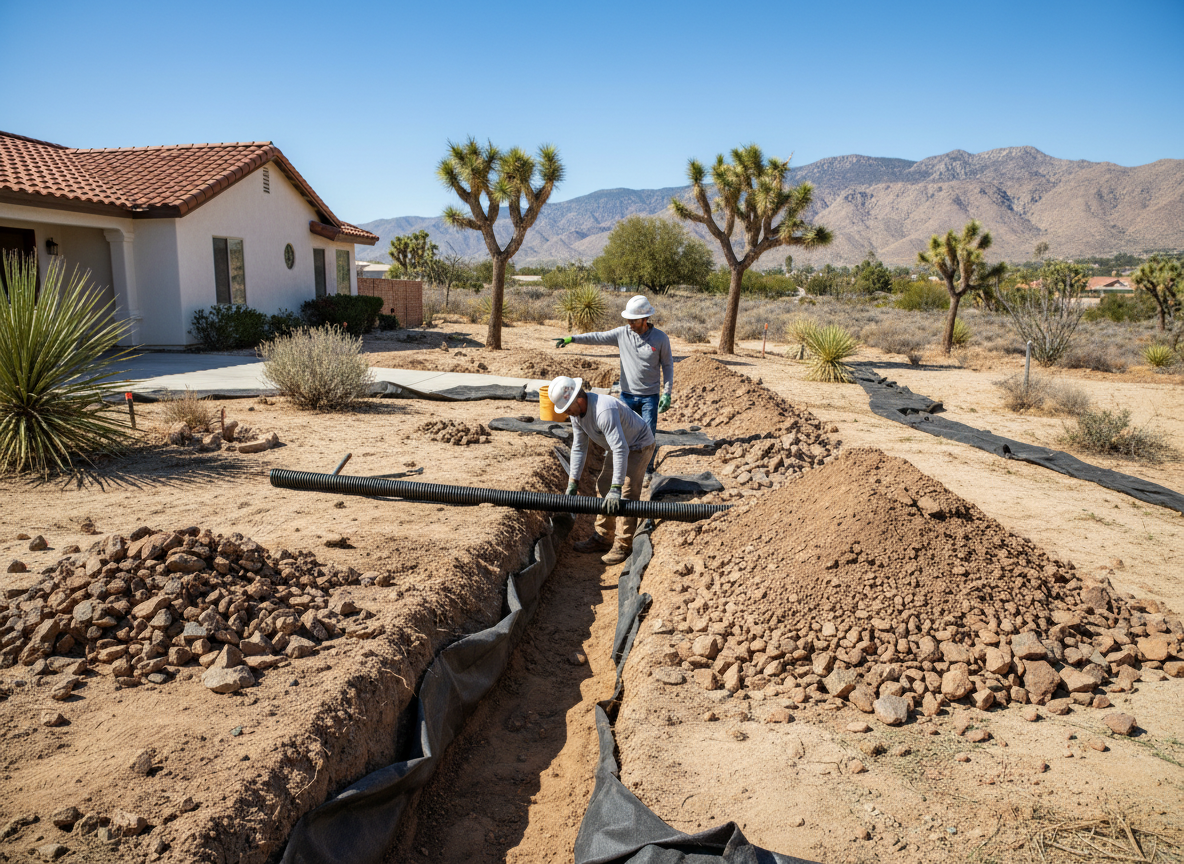
French drain costs for San Bernardino homes commonly fall around $25–$75 per linear foot, while difficult access, deep excavation, hardscape removal or a pumped outlet can push the effective cost higher. A straightforward 40-foot yard drain may therefore be substantially less expensive than a 100-foot system routed around a foundation, even before surface restoration. The biggest cost drivers are trench depth and length, soil conditions, slope, drainage pipe specifications, disposal, access and the location of a safe discharge point. A site visit is necessary for a dependable quote because 2 properties on the same street can require very different layouts.
Trench Length, Depth And Drain Location
Linear footage is the easiest cost factor to see, but depth often matters just as much. A shallow interceptor drain across an open lawn is faster to excavate than a deeper drain beside a foundation, where crews must protect footings, utilities, irrigation and exterior finishes. Foundation-adjacent work may also require hand digging and careful placement of washed drain rock to avoid creating new settlement problems.
Location changes the labor calculation across San Bernardino. Older central properties near Downtown San Bernardino and City Hall may have narrow side yards, established landscaping, patched paving and utility routes added over time. Lots in Verdemont or near California State University San Bernardino can have more elevation change, making grade verification especially important. In Arrowhead and Del Rosa, runoff moving from higher ground can require an intercepting layout rather than a short drain placed only at the wet spot.
For sloped sites, choosing the right French drain layout helps explain why the cheapest trench location is not always the one that controls water effectively.
Soil, Excavation And Site Access
Excavation cost depends on what is actually below the surface. San Bernardino County properties can contain native soil, compacted construction fill, landscape amendments or layers disturbed by previous utility and irrigation work. Fine soil that holds water needs proper filter fabric and clean aggregate so sediment does not quickly migrate into the stone. Rocky or heavily compacted material slows excavation, increases equipment wear and may require more hand work around structures.
Access determines whether compact equipment can reach the trench or every bucket must be moved through a gate. Common cost additions include:
- Narrow side-yard access that prevents machine excavation
- Roots and mature landscaping requiring selective hand digging
- Concrete, pavers or block walls crossing the proposed route
- Buried irrigation and utilities that must be located and protected
- Exported soil when excavated material cannot remain on the property
Muscoy lots may offer more open ground than tightly developed parcels elsewhere, but longer hauling distances across a property still add labor. Where slow-draining soil is suspected, this guide to French drains for clay soil conditions covers material and layout considerations.
Drainage Pipe, Stone And Filter Materials
Material choices affect both the initial price and the drain’s resistance to clogging. A typical system uses perforated drainage pipe surrounded by washed aggregate and a geotextile separator. Pipe diameter, wall design, fittings and cleanout access should match the expected flow and maintenance needs; simply buying the least expensive pipe can create kinks, low spots or difficult cleaning later.
The aggregate is not decorative gravel. It must leave open space for water to move, and it should be clean enough that fines do not immediately fill those spaces. Fabric should separate surrounding soil from the stone without wrapping the drainage pipe so tightly that a small clogged surface blocks the entire system. Solid pipe is normally preferable after the collection zone because it carries captured water toward the outlet without intentionally releasing it along the route.
A detailed French drain installation assessment should identify pipe type, trench dimensions, aggregate depth, fabric placement, fittings and cleanouts. Quotes that omit these details are difficult to compare, even when their total prices appear similar.
Slope, Discharge And Additional Drainage Components
A French drain needs somewhere lawful and practical to send water. Gravity discharge is usually less complicated than pumping, but it requires continuous fall and an outlet that will not erode soil, flood a neighbor or send water onto a sidewalk. Surveying elevations can add planning time, yet it prevents an expensive drainage pipe from holding stagnant water because of a hidden rise in the route.
Some properties need more than a gravel trench. Roof downspouts, concentrated patio runoff or water collecting at a low point may call for solid conveyance pipe, a catch basin or a sump system rather than forcing every source into perforated pipe. A pump adds the basin, electrical requirements, discharge line and future maintenance to the project cost. Outlet protection may also be necessary where concentrated flow reaches bare ground.
These decisions become especially important between San Bernardino, Highland, Colton and Redlands, where elevation and lot configuration can change noticeably from one property to another. For foundation-focused planning, review ways to protect San Bernardino foundations from runoff.
Surface Restoration And Getting A Useful Quote
The trench is only part of the finished cost. Lawn can often be removed and replaced with less work than concrete, decorative pavers, artificial turf or densely planted beds. If excavation crosses a driveway or walkway, restoration may require saw cutting, base preparation and matching materials. Mature roots, fences and irrigation zones can also turn a direct trench into a longer route that costs more but causes less property damage.
San Bernardino’s very hot summers affect scheduling and restoration. Disturbed planting areas dry quickly, while intense seasonal rain can expose grading mistakes in a short period. A drain should therefore be priced as a complete water-management route, not as pipe buried at the lowest visible spot near the house.
Before comparing quotes, ask for:
- Total trench length and depth range
- Pipe diameter, pipe type and cleanout locations
- Aggregate and filter-fabric specifications
- The exact outlet or discharge method
- Soil disposal and surface-restoration allowances
- Treatment of utilities, roots and irrigation crossings
When the source of moisture is uncertain, a drainage system inspection can separate runoff, irrigation leakage and grading issues before excavation begins. San Bernardino Drainage is based in San Bernardin