2026-08-28 ·
How to Maintain a French Drain System in San Bernardino
# How to Maintain a French Drain System in San Bernardino
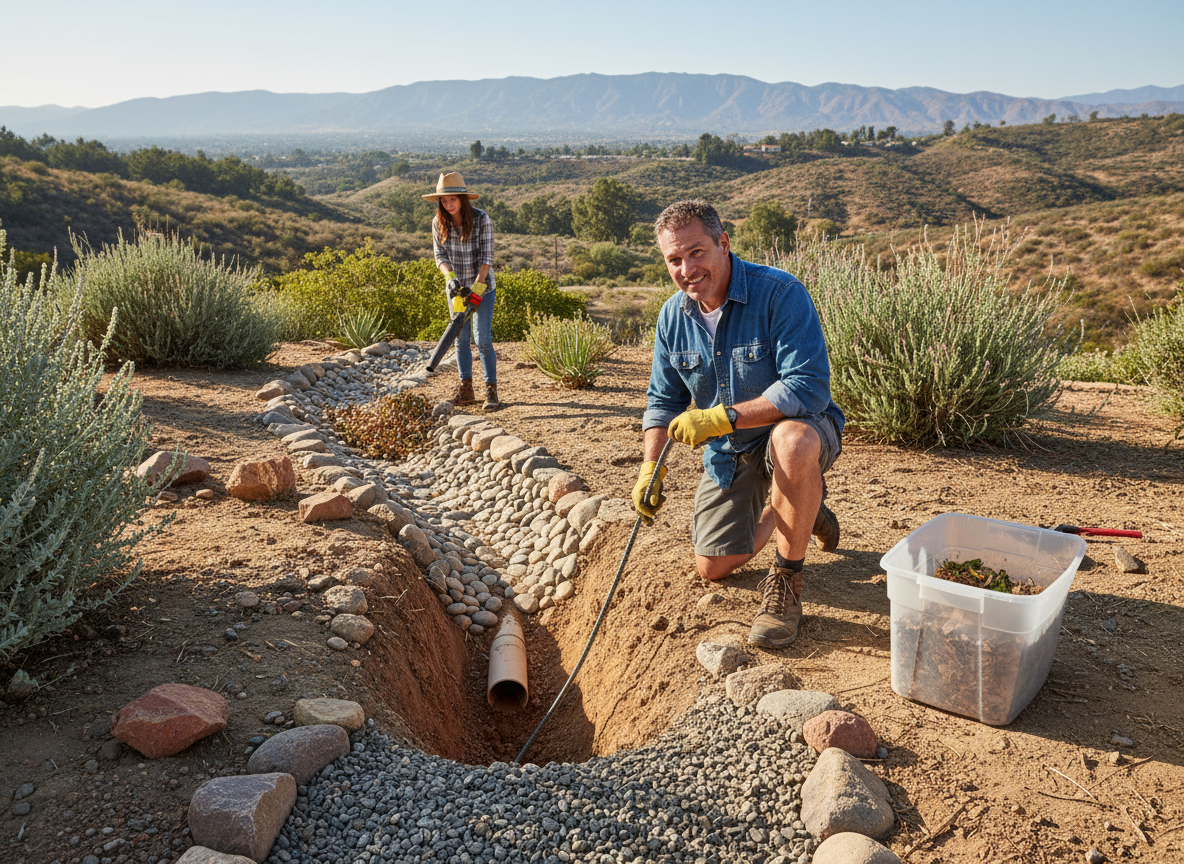
Maintain a French drain in San Bernardino by inspecting it at least 2 times per year, clearing exposed openings, removing surface sediment, and testing water flow before seasonal rain arrives. Check it again after any storm that produces concentrated runoff or leaves standing water near the foundation. San Bernardino’s very hot summers can bake exposed soil, loosen landscaping material, and allow debris to accumulate during long dry stretches; when rain finally comes, that material may wash into the gravel and drainage pipe all at once. A sound maintenance routine protects the drain’s flow path without unnecessary digging.
Inspect Before Rain, Not During a Drainage Emergency
Schedule the main inspection near the end of the dry season, while the trench, outlet, and surrounding grade are easy to examine. Walk the full route from the wet area to the discharge point and look for settled soil, displaced gravel, new roots, irrigation leaks, or landscaping that now directs water toward the trench. On sloped properties in Arrowhead and Verdemont, also check whether runoff has carved a channel across the drain or carried soil onto its surface.
Use a garden hose to introduce water at an accessible inlet or cleanout for 5–10 minutes. Water should move through the system and emerge steadily at the outlet without backing up. A buried system may take a short time to respond, but persistent pooling suggests sediment, root intrusion, a crushed drainage pipe, or inadequate fall. If the route and discharge point are unclear, a drainage system inspection can locate accessible components and distinguish a blockage from a layout problem.
Keep Inlets, Gravel, and Outlets Clear
French drains often lose performance from the outside inward. Leaves, mulch, fine soil, and decomposed landscaping material can cover the gravel surface or enter an open collection point. Remove debris by hand or with a plastic rake; avoid driving a shovel deeply into the trench because it can tear filter fabric or damage shallow pipe.
Focus on these maintenance points:
- Surface gravel: Pull back accumulated soil and replace gravel that has become embedded in mud.
- Catch points and cleanouts: Remove leaves, roots, insect nests, and loose sediment.
- Pipe outlet: Keep at least 12–18 inches around the opening free of weeds and stored materials.
- Discharge path: Confirm that released water can continue downhill without returning toward the building.
In Downtown San Bernardino and around older properties near San Bernardino City Hall, later paving, patio work, and landscape changes can alter grades that once carried water away. In Muscoy and Del Rosa, bare soil or loosely covered planting beds can also contribute sediment. Correct the source rather than repeatedly clearing the same clogged section.
Flush the Drainage Pipe Carefully
Flush a drainage pipe only when it has an accessible cleanout or inlet and a confirmed outlet. Start with an ordinary garden hose rather than a high-pressure nozzle. Feed the hose gently, run water in short intervals, and watch the outlet for sediment and steady flow. If water immediately returns through the cleanout, stop; forcing more water can saturate the trench beside a foundation without removing the obstruction.
Do not insert rigid rods blindly into perforated pipe. They can catch on joints, puncture lightweight material, or compact a sediment plug farther down the line. Mechanical cutting and aggressive pressure cleaning also require care because the pipe’s material, age, and condition may be unknown.
A drain that repeatedly clogs after flushing may have damaged fabric, an incorrect gravel envelope, root intrusion, or a low section that holds sediment. Those conditions call for targeted French drain repair, not more pressure. If the system has never drained properly, review how slope and outlet placement affect French drain layouts on San Bernardino sloped properties.
Control Sediment, Roots, and Irrigation
Maintenance extends beyond the trench itself. During San Bernardino County’s long, hot summer, irrigation may be the only regular source of water around a house. A broken sprinkler, overspray, or drip line placed beside the foundation can keep feeding a French drain and mask a plumbing or irrigation problem. Turn irrigation zones on individually and look for runoff entering the gravel, unusually soft ground, or constant outlet flow during otherwise dry weather.
Keep aggressive roots and dense groundcover away from cleanouts and outlets, but do not remove established trees without considering slope stability and shade. Trim small invading roots where they are visible; recurring roots inside the pipe indicate an opening or damaged joint that needs investigation.
Terrain also changes the maintenance priority. Foothill properties toward California State University San Bernardino and the Verdemont side can receive concentrated runoff from higher ground, while flatter lots toward Colton may depend more heavily on a clear outlet and precise grade. Conditions can also differ toward Highland and Redlands, so compare what happens at the drain during irrigation with what happens during natural rainfall.
Recognize When Maintenance Is Not Enough
A functioning French drain should reduce persistent saturation in the area it was designed to intercept. It does not correct every source of water, and it should not be expected to compensate for roof runoff discharged beside a wall, a leaking supply line, or paving that slopes toward the building. Read how rainwater runoff affects San Bernardino foundations before assuming the buried drain is the only problem.
Arrange a closer evaluation when you notice:
- Water remaining above the trench after a flow test
- No discharge at the outlet despite water entering upstream
- Soil collapsing or forming a continuous depression over the pipe
- Mud, roots, or gravel emerging from the outlet
- Dampness returning soon after the pipe is cleared
- An outlet that releases water toward a neighboring lot, walkway, or foundation
Keep a simple record of inspection dates, irrigation changes, and where pooling appears. Photos taken from the same positions are useful for tracking settlement. San Bernardino Drainage is based in San Bernardino and is available Mon–Fri, 8am–6pm, and Sat, 9am–2pm when inspection or repair is needed.